
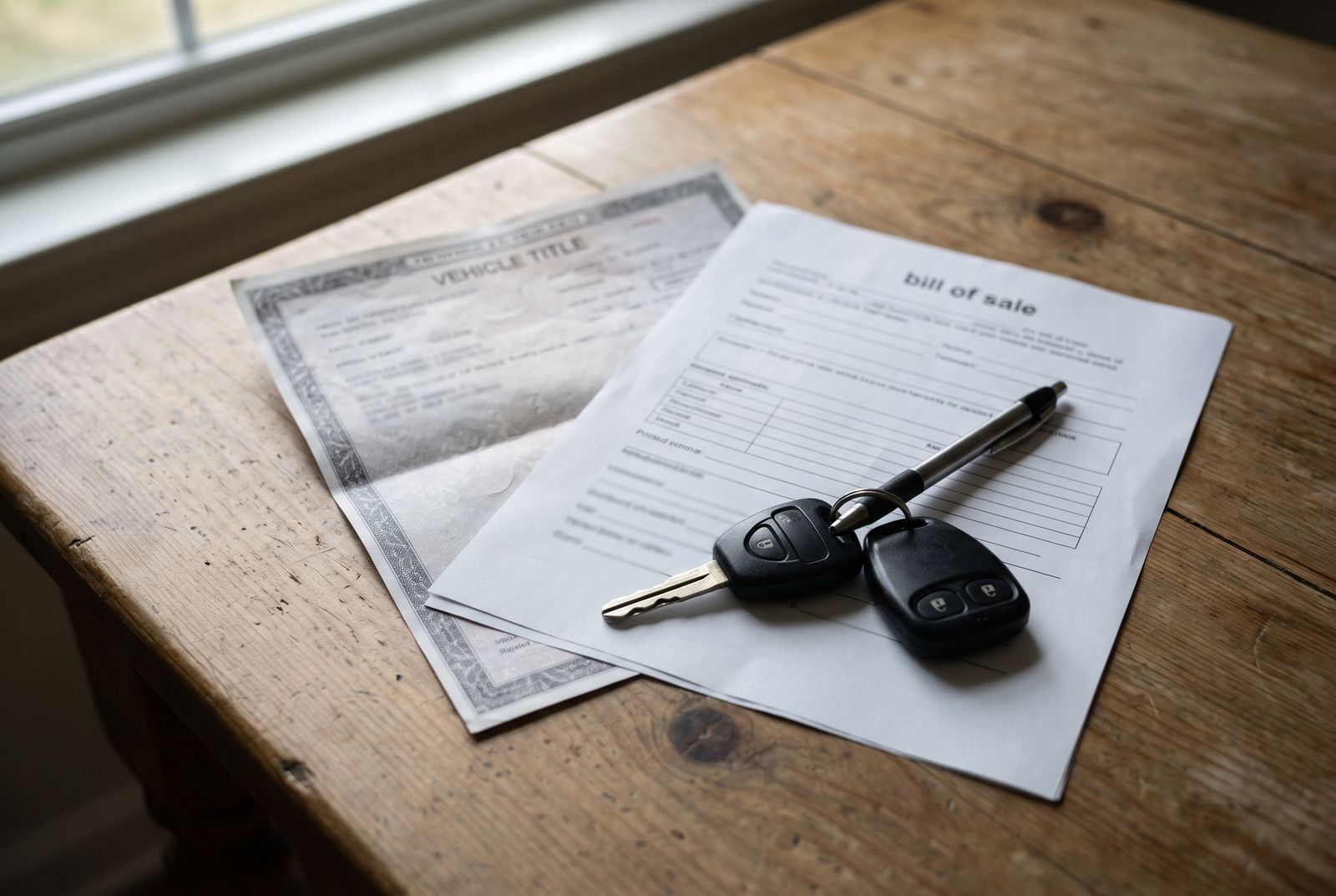
Find the VIN and make sure it matches
The vehicle identification number is a 17-character code that identifies one specific vehicle. It never uses the letters I, O or Q, which avoids confusion with numbers. You will find it in at least three places on most cars: a plate on the driver's side of the dashboard, visible through the windshield; a sticker on the driver's door jamb; and on the title and registration.
Match all of them. A dash plate that looks tampered with, a missing door sticker on a car that has never had that door replaced, or a title VIN that differs by even one character are all reasons to stop. A replaced door can explain a missing sticker, but then you want to know why the door was replaced.
The tenth character of the VIN encodes the model year. Decoders online will translate the full VIN into year, make, model, engine and assembly plant. If the listing says one engine and the VIN says another, ask why.
Start with the free checks
Three free tools cover the most dangerous problems, and none requires an account.
- NHTSA recall lookup
- The National Highway Traffic Safety Administration's site shows open safety recalls for a VIN. Unrepaired recalls are usually fixed free by a franchised dealer for that brand, but you want to know about them, especially airbag recalls.
- NICB VINCheck
- The National Insurance Crime Bureau offers a free lookup that shows whether participating insurers reported the vehicle stolen and not recovered, or declared it a total loss.
- Air Care Colorado lookup
- For cars registered in the Denver program area, the emissions lookup shows whether a test is due and the testing history. Test records can include odometer readings, a useful cross-check.
Paid history reports and NMVTIS
The National Motor Vehicle Title Information System, or NMVTIS, is a federal database that collects title information from state motor vehicle agencies along with reports from insurers, junk yards and salvage yards. It is designed to stop a branded title from being "washed" clean by retitling a car in another state. The Department of Justice approves a list of providers who sell NMVTIS reports for a small fee; the list is on the official NMVTIS site.
Commercial history reports pull from NMVTIS and add other sources: some police accident reports, service shops that share records, auctions, and registration events. They can show the number of owners, where the car was registered, reported accidents and gaps in the timeline.
| Check | Good at finding | Will usually miss |
|---|---|---|
| NMVTIS report | Title brands, junk and salvage reports, latest odometer on title records. | Accidents with no insurance total, service history, recalls. |
| Commercial history report | Owner count, registration locations, some accidents and services, auction records. | Accidents paid out of pocket, repairs at shops that do not report, hail damage never claimed. |
| NICB VINCheck | Unrecovered theft and insurer total losses from participating companies. | Anything not reported by a participating insurer. |
| Mechanic inspection | Physical evidence of repairs, frame work, leaks, wear. | Paper history; it complements the reports, it does not replace them. |
The table makes the point: a clean report means nothing bad was reported, not that nothing bad happened. That is why the physical inspection still matters on a car with a spotless history.
Title brands explained
A title brand is a permanent notation that records something significant about the vehicle's past. Terms vary by state, but these are the ones a Denver buyer is most likely to meet.
- Salvage
- An insurer or owner declared the vehicle a total loss, usually because repair costs exceeded a share of its value. A salvage-titled car generally cannot be registered for the road until it is repaired and inspected.
- Rebuilt or reconstructed
- A salvage vehicle that has been repaired and passed the state's inspection process. It can be registered, but quality of repair varies widely and some insurers limit coverage.
- Flood or water damage
- The vehicle was damaged by water. Electrical and corrosion problems can surface long after a car looks clean.
- Odometer brands
- Terms such as "not actual mileage" or "exceeds mechanical limits" mean the true mileage is unknown or higher than shown.
- Lemon buyback
- Some states brand vehicles that a manufacturer repurchased under a lemon law. Ask what defect led to the buyback and whether it was fixed.
A rebuilt car with documented, professional repairs can be reasonable transportation at a lower price. The problems come when the brand is hidden, when the price does not reflect it, or when you later try to insure, finance or sell it. Know exactly what you are buying and pay accordingly.
Odometer problems
Digital odometers have not ended mileage fraud; they have just changed the tools. Compare every odometer reading you can find: the history report timeline, service stickers on the windshield or door jamb, oil change receipts, emissions test records and the title. Mileage should only go up, and at a rate that makes sense for the owner's story.
Then compare the numbers to the car itself. A low-mileage car with a worn driver's seat bolster, a shiny steering wheel, a sagging driver's door and pedal rubber worn through is telling a different story than its dash. Federal rules require odometer disclosure on title transfers for most vehicles under 20 years old; the seller is certifying that number, so make sure it is written down.
Flood cars far from the flood
Colorado is far from the coasts, but flood-damaged vehicles move across the country after major storms, and some are retitled before the damage is recorded. Colorado has had its own flood events, too. Signs worth checking:
- A musty or heavily perfumed interior, or new carpet in an older car
- Silt or a water line in the spare tire well, under the seats or behind door panels
- Rust on seat rails, seat-belt hardware or screws under the dash, where it should not be
- Fogged headlights or taillights with a visible water line
- Intermittent electrical faults: flickering gauges, dead windows, warning lights
- A history report showing a recent registration in an area that had a major storm
Reading a history report critically
Look past the green checkmarks and read the timeline. Several questions are worth asking about any report:
- Do the registration locations make sense for the seller's story? A "one-owner Colorado car" registered in three states needs an explanation.
- Are there long gaps with no records? A two-year silence can be an owner who did their own oil changes, or a car that sat damaged.
- Did ownership change shortly after a reported accident or damage event? Quick flips after damage are a pattern worth noticing.
- Was the car ever at an auction? Auction records can include condition notes or announcements that the seller may not mention.
- Does the mileage climb steadily? Flat or falling numbers deserve a direct question.
Bring anything odd to the seller in writing, and to your mechanic. Then, once the paper side checks out, move on to the inspection checklist and the title transfer steps.
Report says something you do not understand?Send us the confusing line, without personal details. We will explain what it usually means and what to ask.
Ask about a report