
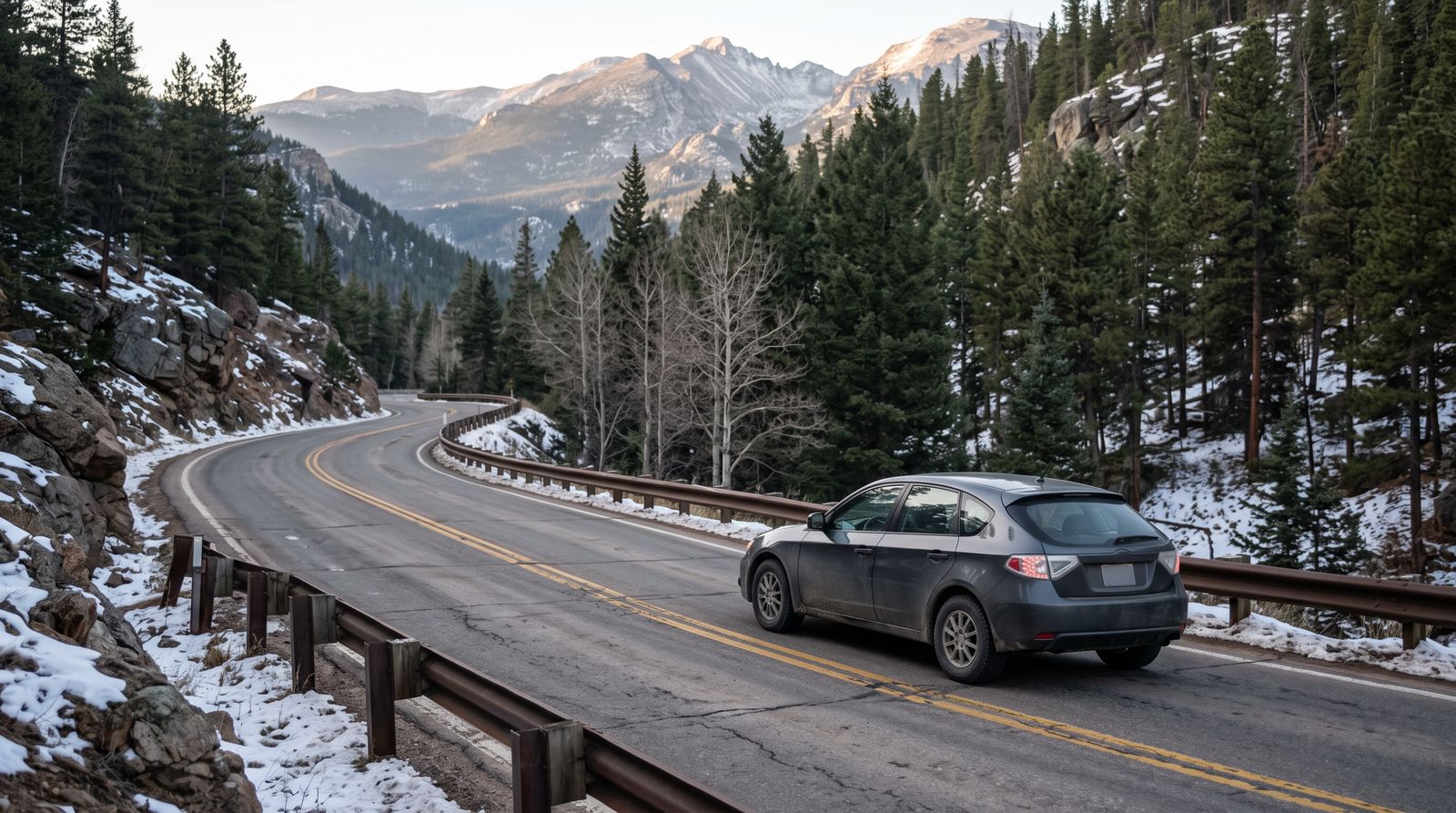
Start with the driving you actually do
Colorado car advice tends to assume everyone heads to the ski areas every weekend. Plenty of Denver drivers do not. A commuter who stays on plowed city streets has different needs than someone who drives I-70 over Vail Pass every Saturday from December to April, or someone who lives up a dirt road in the foothills. Be honest about your year, then buy for the hardest ten percent of it, not the hardest day you can imagine.
That framing also protects your budget. An all-wheel-drive SUV costs more to buy, more to fuel and more to maintain than a comparable front-wheel-drive car. For some drivers it is the right tool; for others, a good set of winter tires on a cheaper car gets most of the benefit for far less money.
Altitude and engine power
Air at Denver's elevation is thinner than at sea level, so a naturally aspirated engine (one without a turbocharger or supercharger) takes in less oxygen and produces less power. A common rule of thumb is a loss of roughly three percent of power per thousand feet of elevation. At a mile high that adds up to a noticeable difference, and it gets larger as you climb toward the Eisenhower Tunnel.
Turbocharged engines compensate for much of that loss because the turbo compresses the intake air. That is one reason small turbo engines are popular here. The trade-off is complexity: turbos add heat, oil demands and parts that can wear. On a used turbo car, ask for oil change records and listen for whistling or whining under acceleration that sounds different from normal turbo spool.
If the car you are considering has a small non-turbo engine, include a highway on-ramp with a grade in your test drive. If merging feels strained in Denver, it will feel worse heading up into the mountains with passengers and gear.
Tires and Colorado's traction law
Tires do more for winter safety than any drivetrain. When Colorado's traction law is in effect on I-70 and other designated mountain routes, passenger vehicles must have one of the following: tires with the mountain-snowflake or mud-and-snow (M+S) marking, a four-wheel or all-wheel drive system, or chains or an approved alternative traction device. Tires used to meet the law need at least 3/16 inch of tread. A stricter chain law can be applied in severe conditions.
For a used-car buyer, that means two checks:
- Read the tire sidewall for the markings. Many all-season tires carry M+S; dedicated winter tires carry the three-peak mountain snowflake.
- Measure the tread depth. 3/16 inch is 6/32 inch. A tread gauge costs very little and settles the question in seconds.
If the tires are worn near that line, budget for replacements. On an all-wheel-drive vehicle that usually means all four at once. Dedicated winter tires on their own wheels are worth asking about, too; some sellers include them, and a set in good shape adds real value.
AWD, 4WD or front-wheel drive?
| Drivetrain | Where it helps | What to check on a used one |
|---|---|---|
| Front-wheel drive | City and highway driving, especially with winter tires. Simpler and usually cheaper to run. | Front tire wear, CV axle boots, clicking on full-lock turns. |
| All-wheel drive | Getting moving on snow and ice, slick hills, and meeting the traction law without chains. | Four matching tires, fluid service records for transfer case and differentials, binding or shudder in tight turns. |
| Four-wheel drive (part-time) | Deep snow, unplowed roads, dirt and trailheads, towing. | That 4WD engages and disengages cleanly, no grinding, transfer case leaks, and front-end wear on trucks used off road. |
| Rear-wheel drive | Dry-road handling and towing on larger trucks. | Winter tires are close to essential here; check whether the seller has a set. |
One point drivers forget: all-wheel drive helps you go, not stop or turn. Braking and cornering grip come from the tires. An AWD car on worn all-season tires can be less safe on an icy descent than a front-wheel-drive car on good winter tires.
Hail damage and hail repair
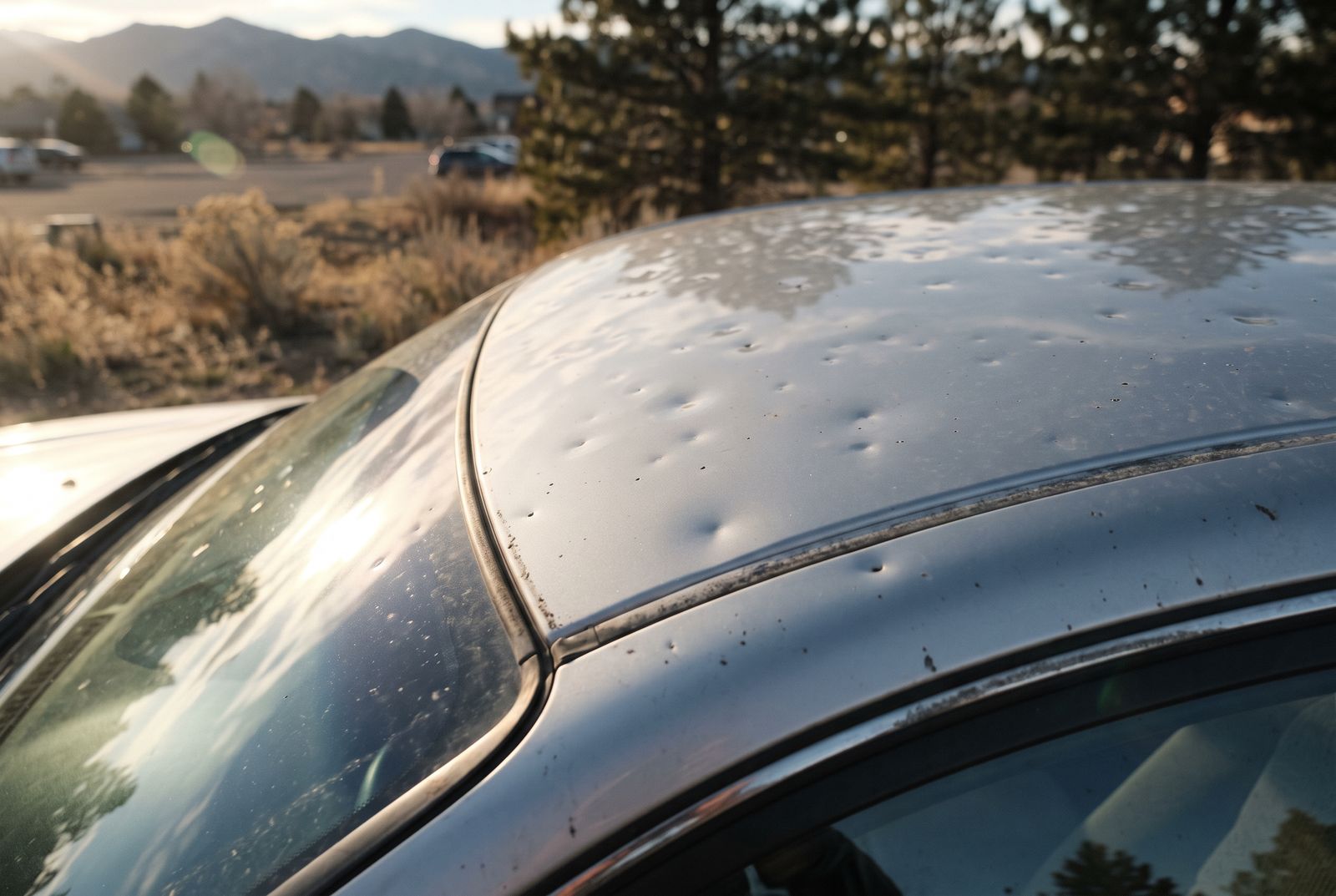
The Front Range is one of the most hail-prone areas in the country, and a car that has lived here for several summers may well have taken a hit. Hail damage is not automatically a reason to pass on a car. It does affect value, and how it was handled matters.
- Unrepaired dents are cosmetic, but they lower resale value. Price the car accordingly.
- With paintless dent repair, a skilled technician massages dents out from behind the panel and leaves factory paint intact. Good work can be close to invisible.
- After panel replacement or a repaint, look for paint texture differences, overspray and uneven gaps around the roof, hood and trunk.
- Severe hail sometimes leads an insurer to total a car, which can result in a branded title. Check the title and history report.
Ask the seller directly whether the car had a hail claim. If they kept the insurance paperwork, it shows exactly what was repaired.
Winter deicer and hidden corrosion
Colorado's dry air spares many cars the body-panel rust common in the Midwest, which can lull buyers into skipping the underside. Road crews here use liquid magnesium chloride and other deicers that cling to the undercarriage. Over years, that can corrode brake lines, fuel lines, exhaust hangers, subframes and suspension hardware.
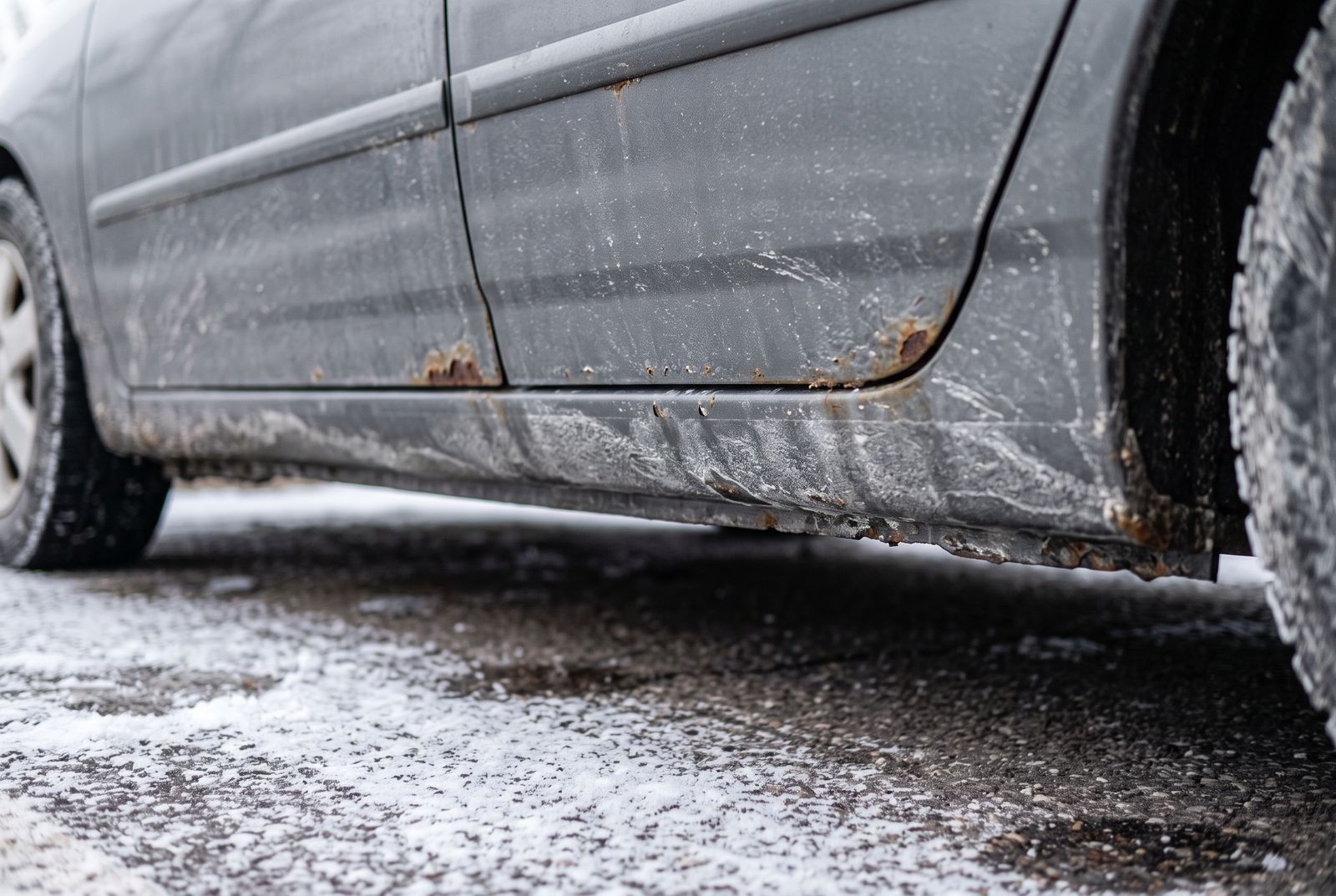
Look with a flashlight behind the wheels and along the rocker panels. Surface rust on heavy steel parts is normal. Flaking, swelling or rust on brake lines is not. Be wary of fresh black undercoating sprayed over everything on an older car; it can hide problems. The mechanic you hire for the pre-purchase inspection can check the underside properly on a lift.
Cars brought in from states that use rock salt heavily deserve extra scrutiny. The history report shows where the car has been registered.
Sun, dry air and rubber
Higher elevation means stronger ultraviolet exposure, and the semi-arid climate pulls moisture out of plastics and rubber. On older cars parked outside, look for cracked dashboards, faded and chalky clear coat on the roof and hood, brittle window seals and cracked wiper blades. Check the rubber of belts and hoses under the hood for fine cracks. None of these is a deal-breaker alone, but together they show how the car was stored.
Mountain grades: brakes and transmissions
Long descents on I-70 and the canyons put heavy, sustained loads on brakes. Drivers who ride the brakes rather than using a lower gear can overheat them, which warps rotors and wears pads quickly. During the test drive, feel for pulsing in the pedal or steering wheel when you brake from highway speed; that often means warped rotors.
Repeated climbs heat transmissions, especially when the car was towing or loaded with gear. Ask whether the transmission fluid has ever been serviced, and watch for slipping or harsh shifts on the test drive. On a truck or SUV with a hitch, ask what was towed and how often.
Not sure a car suits your driving?Tell us your commute, your weekends and the car you are considering. We will tell you what we would check.
Ask about fit