
Think in out-the-door dollars
Buyers who set a budget around the asking price tend to overspend by the end of the first month. The out-the-door figure is what actually leaves your bank account: the price, plus sales tax, plus any dealer handling or documentation fee, plus title and registration. Add the inspection you should pay for before buying, and the near-term repairs that inspection turns up, and you have the real number.
Decide that number before you look at a single listing. It is much easier to hold a line you drew at the kitchen table than one you try to draw in a showroom or a stranger's driveway.
Budget calculator
Enter your own numbers. We do not supply prices or tax rates, because they depend on the car and on where you live. Find your combined sales tax rate through your city or county, and get registration estimates from your county motor vehicle office's fee estimator. Figures are saved only in this browser.
Price the car against the market
Value guides such as Kelley Blue Book, Edmunds and J.D. Power each publish estimates based on year, make, model, trim, mileage, options, condition and ZIP code. They will not agree exactly, and that is useful: the spread tells you the plausible range. Run the exact trim, not just the model. The difference between a base model and a well-equipped trim of the same car can be large.
Then look at what similar cars are actually listed for in the Denver area right now, ideally within a reasonable mileage band of the one you want. Asking prices are not selling prices, but a car listed well above its peers needs a reason, such as unusually low miles, complete records or desirable options. A car listed well below its peers also needs a reason, and that reason is often in the history report or under the car.
Most value guides ask you to pick a condition grade. Sellers tend to pick "excellent." Very few used cars are. Price from "good" or "fair" unless the inspection supports a higher grade, and note that guides often assume the car has no title brand.
Price the car against what it is about to need
Two cars with the same market value are not the same deal if one needs tires, brakes and a timing belt next month. Fair price for a specific car is roughly the market value for its year, trim and mileage minus the cost of what it needs soon. That is where the pre-purchase inspection pays for itself: it turns vague worries into a written list with estimated costs.
Items that often come due on a used car
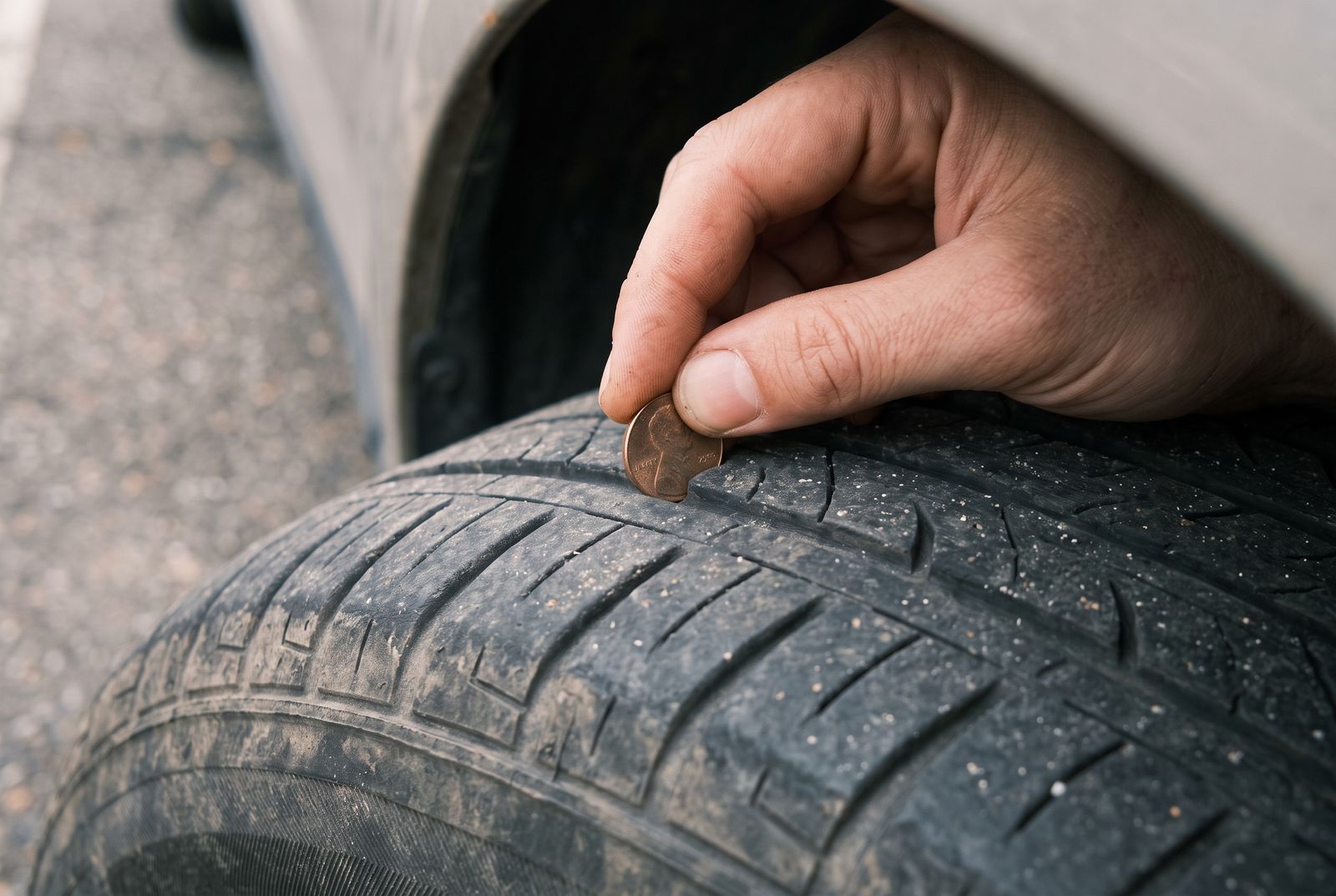
- Tires, especially if they are near the traction-law minimum described in the Colorado driving guide
- Brake pads and rotors, which wear faster on cars driven in the mountains
- A timing belt, on engines that use one, at the manufacturer's interval
- Transmission, coolant and brake fluid services if records do not show them
- A battery, which Denver's cold mornings find out quickly
- Repairs needed to pass an emissions test, where one is required
The owner's manual or the manufacturer's maintenance schedule tells you what is due at what mileage. Compare it to the service records. Missing a major service that is due soon is a legitimate reason to adjust your offer.
The cost of the next year
The purchase is a one-time cost. Ownership keeps going. Before you commit, get an insurance quote on the specific VIN, estimate fuel using the car's rated economy and your actual driving, and set aside a monthly amount for maintenance. Older cars and some brands cost noticeably more to keep running. Colorado's specific ownership tax, charged with registration each year, falls as the car ages, which is one small advantage of buying older.
A useful test: if the car's monthly running costs plus any loan payment would make your budget tight, the car is too expensive for you, even if the purchase price fits.
Paying for it
This site does not arrange or offer financing. If you plan to borrow, the general consumer advice is simple: shop for the loan before you shop for the car. A preapproval from your own bank or credit union gives you a rate to compare against any financing a dealer offers, and keeps the loan discussion separate from the price discussion. Compare loans on the annual percentage rate and the total amount you will pay over the term, not only the monthly payment. A longer term lowers the payment and raises the total cost.
For a private sale, many banks will issue a cashier's check or complete the transaction at a branch. That gives both you and the seller a traceable payment and a safe place to meet.
Making an offer you can stand behind
- Bring your numbers: the value-guide range, two or three comparable local listings and the inspection estimate.
- Make one clear offer with the reasons attached, then stop talking and let the seller respond.
- At a dealer, negotiate the out-the-door price in writing. Agreeing on a vehicle price and then discovering fees is how budgets break.
- Know your walk-away number and use it. There is always another car; there is not always another chance to avoid a bad one.
Want a second opinion on a price?Send the listing and what the inspection found. We will tell you how we would think about the offer.
Get a second opinion